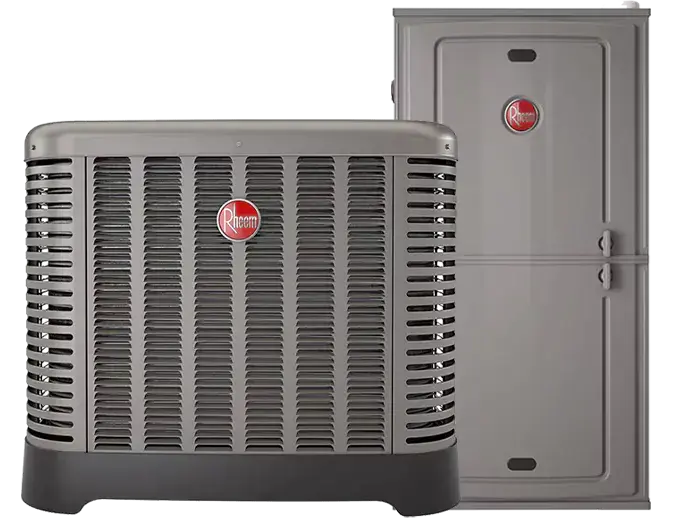
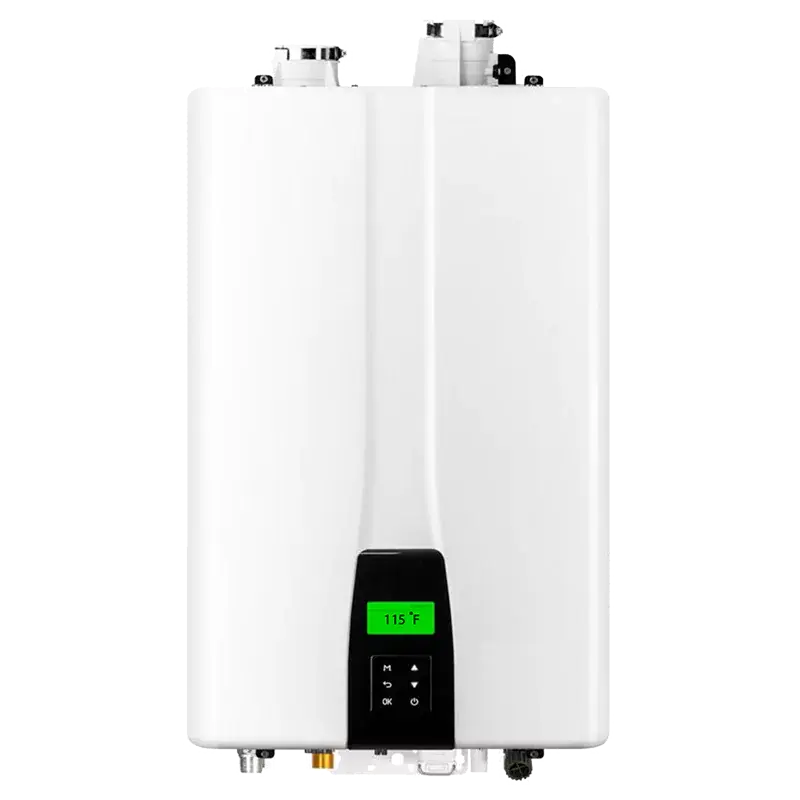
Do I require heating equipment repair before winter?
November 25th, 2011
November 25th, 2011
Can you imagine being in your house on a cold winter day without any heating, wishing you had got it checked at the onset of winters and avoided this situation? It is mandatory that you schedule for your heating equipment repair on-time, get the following things checked and let the winter months pass smoothly.
A timely call to your heating equipment repair professional will not only avoid premature failure of the unit, but also detect and resolve any possible causes of impending breakdown.
Replacement of air filters on a timely basis also ensures adequate air flow and maximum efficiency of the unit, thereby reducing the need for frequent heating equipment repair.
Ensure that all possible sources of heat loss (called drafts) are sealed off completely, to increase the unit’s efficiency, minimize excess use of energy and heating equipment repair costs.
Adding insulation to the attic will help in reducing the heat loss as well as the energy bills by upto 30%. The heating equipment repair contractor will be able to help you in adding the insulation.
Conducting a home energy bill audit will also save your costs drastically. It involves calling an inspector home and having the doors, windows and attics checked for any areas of possible energy loss. These inspectors are state certified, charge only around $30 per visit and provide valuable ways of saving money.
Replacement of old thermostat with a new and more accurate one is also one of the many ways to save huge bills on heating equipment repair. However, you will require your heating contractor’s help in setting this up for you.
Apart from the very many ways mentioned above to save energy and heating equipment repair costs, it makes all sense to do any revamping work either yourself or through your heating equipment repair professional to avoid any last-minute and more expensive breakdowns and resting in the comfort and warmth of your house in winters.
We’re one of the top heating equipment repair company’s serving Calgary, and surrounding areas. Please feel free to reach us anytime at 403-216-8439.
November 4th, 2011
The very first look as soon as you open the door can tell you a lot. If his clothes are dirty, it will usually be his pants. His uniform shirt on the other hand will be clean.
Although unbelievable, many plumbers will fail these tests. When it comes to your plumbing, you want to hand over the responsibility only to a true professional. And when it comes to money, they will all charge the same. An impostor will charge just as much a professional because he thinks he is one. So don’t compromise on the quality of the work for the sake of money.
The task of finding a truly professional plumber is not as hard as you think.
Firstly, follow the above steps and determine if the plumber is a professional. If you don’t have a small problem to ask him to fix, collect estimates.
It is always recommended to get the plumber to fix something small, during which you can notice if your relationship with this plumber will be useful forever. If you don’t have any such problem, make sure you get more than one estimate before you decide on your plumber. This is not only to ensure you are not being swindled out of your money but also to make sure the plumber is a professional. As mentioned earlier, do NOT compromise on the quality of work for the sake of expenses because professional work will keep your plumbing structures problem-free for a long time.
Ask the plumber to get started on a small job if there is one. Be prepared to face the ‘bump’. The bump is additional fixing that the plumber will offer to do for an extra charge. There is no harm in him doing the work, it may improve the quality of your structure. It is always better to make use of additional benefits as long the work is truly beneficial. The following are tips which will help you tackle the bump.
At the end of it, money plays a big role when it comes to choosing a plumber. It is necessary to find a plumber who will work within your budget. But never go for a plumber because he charges the least, it could land you in trouble in the future. It is better to spend more in the beginning and have lesser problems than to spend little but more number of times, it will work out more expensive eventually.
October 21st, 2011
DIY plumbing is something that either people love or something that they indulge in to save some cash on plumbing repairs. Painting the walls on a free weekend when there is nothing great on television is quite different from undertaking complex plumbing repairs on your own. Ask any plumber in your vicinity and s/he will testify to the fact that there are more DIY plumbing disaster related jobs than normal plumbing tasks every year.
What might appear easy to do on YouTube or in an e-book could be a different ball game altogether in reality. Even if you have read the instructions well and the pictures/videos clearly detail the whole procedure, getting your hands dirty just because toilet won’t flush, can be a pretty hard affair after a busy week.
Although plumbing matters should ideally be left to people who are experts in them, i.e. plumbers, there are certain things that everyone in your home can do in order to prevent the occurrence of any plumbing issues.
Clogs alone are the single biggest causes of plumbing problems in most of the households. Therefore, preventing them from building up solves 80% of the problems. Please take care that you never flush anything like toilet roll or body waste down the loo. Despite the fact that packing of many such substances states that they are flushable, most often they are not.
Another thing that often causes clogs is the hair that falls while taking shower. Ensure that there is some type of good grate fitted which can effectively catch all those loose hair.
Although clogs are the causes of maximum plumbing issues, they are not the only ones. Frozen pipes, slow toilets and leaky pipes can all create havoc when least expected. This is why it is extremely important to not take matters into your own hand and take help of a seasoned plumbing professional.
We at ClearView Plumbing & Heating have a team of such tenured professionals who have been solving people’s plumbing problems for many years.
October 14th, 2011
With winter at your doorstep, are you looking for some great tips to ensure that your gas furnace holds you in good stead? Well, this comprehensive guide would look to help you, put your best foot forward by offering help with basic furnace questions. These include simple ones like how to go about changing the filter on the furnace, how to check the airflow and what would be the right thing to do when the gas furnace doesn’t light up. We hope that these tips will help you stay warm and cosy this winter.
How to turn on your gas furnace?
No, you are definitely not the only person who wants an answer to this question. A lot of others are wondering about the same thing. But here is a step by step procedure of accomplishing the task.
You have to spot the gas furnace braker which would be on your electric panel board. The panels are usually located inside the garage or the basement. The braker is easy to spot with a furnace sticker. All you have to do is to turn it on.
Once you turn on the braker, you will have to turn the furnace on, and the switch would be located somewhere near the furnace itself, usually in the eye level or a bit higher.
Set the switch for selector to Heat and make sure the furnace is on. You have to set the thermostat for the temperature you need and that would ensure your house has a heating unit on, and working.
Testing the airflow of the furnace
How often have you not found one of the rooms not warming up to your satisfaction? The garbage bag airflow test for furnaces should be able to indicate to you if your furnace registers are all functioning properly and there is a healthy supply of warm air being pumped out. There are 2 essential steps for this test.
Tape the garbage bag to something that will keep it open, like a cardboard, for example and crush it flat.
Place it near the exhaust hood or register and then check the time taken for the garbage bag to get inflated fully.
When the inflation time is 10 seconds, it means that the airflow is 10L/s nearly. This is an indicator of the fact that the furnace is not pumping as much heat into the room as you would have liked in the ideal scenario. In fact, this simple method could be used as a litmus test after major renovations or repairs involving the heating units in a house.
What if your furnace refuses to ignite?
Don’t panic, if it doesn’t ignite one fine winter morning. If your fan is running but sending you only cold air with the furnace on, try the simple trick of turning off the furnace for some time and then turning it on. If it works, well and good; otherwise you should call furnace investigation specialists.
Changing the furnace filter
Here are some simple tips when it comes to the furnace filter and its condition.
Airflow from the furnace could be maintained at optimum when you ensure that the filter is properly maintained and in the right working condition.
As a precaution, the furnace filter has to be changed once every 3 to 6 months.
For the gas furnace to work efficiently you will have to check the furnace filter every month and inspect it for problems.
The first thing would be to open the external rack, also called panel door. Slide out the furnace filter and check for darkness or discolouration on the filter.
The trick is to change the filter whenever you are unable to look through it.
The new filter has to be installed in the airflow direction, sliding it in.
Checklist for troubleshooting furnace problems
When your furnace seems to be out of order, there are some immediate questions that you need to be asking before you make a frantic call to the furnace technicians. This might help you fix the problem yourself saving some money too. Here is a list of things to check before resorting to the final step of calling for help.
Check if the furnace venting has been blocked due to snow. If yes, clear the blockage and try turning it on.
The thermostat has to be set to Heat position. The temperature should be set to normal room temperature.
The batteries of the programmable thermostat should be fresh.
The circuit braker inside the electric panel has to be in the right position.
The door of the furnace has to be closed and the furnace should be turned on. It could have been turned off by accident.
The furnace filter has to be inspected regularly and changed every now and then.
Removing Blockages from Vents in the Right Way
As soon as you suspect a problem with the furnace’s exterior vent, the first thing to do would be to check for any blockages in the vent, such as ice, snow or even household articles.
If yes, turn off the furnace, remove the obstruction and then turn it back on through the breaker or switch.
The fan motor of the furnace could have seized to work, if there isn’t any airflow through the interior vent of the furnace. This is one problem, the furnace technicians are better equipped to handle.
How to React to a Gas Leak?
If you have sniffed the smell of a rotten egg, there could be the chance of a gas leak. In such a scenario avoid turning on any switches and open all doors and windows in the house. Don’t smell the gas yourself. Head out of the house and call the local gas provider and plumbing and heating technicians.
Preventing Heat Loss Due to Air Leaks
Air leakage has traditionally been one of the biggest factors for loss of heat during winter. In other words, air leaks are responsible for cranking up the heating bills of many houses. As warm air escapes from your house, the gas furnace tries to replace it by pumping more warm air resulting in greater heating costs. You can save a lot on heating bills if you can fix the warm air, leaks, thereby preventing heat loss.
Preventing heat loss involves concentrating mainly on different areas in the house construction. In each case, there are some prevention steps which you need to look at more closely.
Preventing leaks from electrical outlets on the exterior walls:
Preventing leaks in attic and basement:
Preventing leaks around doors and windows:
This could be the most difficult thing to do as doors and windows close and open often for various reasons. However, there are certain steps to reduce the leaks as much as possible.
Preventing Baseboard leaks:
Baseboard leaks can be prevented using some caulking along the seams and also between the wall and the floor.
October 7th, 2011
So, you get back home after a tiring, long day at work and all that you need is a steaming hot shower to relax all your strained nerves. You enter the bathroom excitedly only to find that the bad day hasn’t yet come to an end yet. The shower head has very low pressure; too low to enjoy a good hot shower.
Well, obviously, your evening is spoilt and you might have to wait until the plumber fixes it up the following day. However, what if you could fix it on your own?! Yes, it’s possible. Let’s look at some of the handy techniques that can help you fix this low pressure problem yourself.
So, How to fix the problem of low pressure in shower?
Before delving into the techniques for solving the low pressure shower problem, let us look at some root causes which make it happen. One of the main reasons why water might flow at low pressure from the shower head could be the inbuilt design that limits pressure, mainly to limit the flow of water and save on water bills. There could be other reasons as well. Let’s discuss some of them as follows:
Check the water pressure setting at the main water line:
In case the low water pressure problem is not only in the shower head, but also in other fixtures and it has been there for quite some time, check the water flow volume settings at the main water line. The flow may have been set to low. Changing the flow volume will instantly solve the problem.
Get rid of the flow constrictor:
Most of the shower heads manufactured nowadays come fitted with a plastic device known as flow constrictor. The function of this device is to reduce the pressure of the water flow. So all you need to do is remove this flow constrictor and you’ll have the normal water supply thereafter. You can avoid such problems beforehand by making sure that you buy a shower head that doesn’t have a flow constrictor fitted inside it.
Clean up the clogs in the shower head:
If the water pressure problem persists even after removing the flow constrictor, you will need to properly clean the shower head from inside and open up all the blocked perforations. This will definitely restore the water pressure back to normal. In order to remove the clogs, remove the shower head and thoroughly clean any depositions that are blocking the water flow, with the help of vinegar and a wire brush. Ensure that every hole is cleaned out properly.
Replace the shower head: If none of the above techniques work, replace the problematic shower head with a new high pressure shower head. There are many good brands of shower heads available in the marketplace. Opt for the one that suits your needs and bathroom design the best.
For any assistance with plumbing related issues in your home, we’ll be more than delighted to help you.
September 30th, 2011
Find below an elementary outline of what tank water softeners are and how they work. We will discuss, in specific, the main principles of tank water softeners and what you can do in case there is a problem. When you have reached the end of the article, you should be fully aware of how the entire system works.
The fundamentals of Tank Water Softeners
Often, we take water in our house for granted. It is essential that we know that water isn’t in it’s purest form of H2O everywhere. Water also comprises of minerals that it picks up from the ground before flowing into the water supply. Calcium and Magnesium are the two major minerals that are responsible for many problems.
A higher mineral content will stunt the efficiency of soap, regardless of where it is used – the dishwasher, washing machine or in the shower. This makes cleaning a very difficult task. Not only does it reduce the efficiency of soaps but the soap also ends up leaving a residue behind. This causes irritation to the skin during laundry or while taking a shower.
The main function of a water softener tank is to remove calcium and magnesium content from the water. This is accomplished by running water via a salt water tank or one that is full of resin beads in salt water. The salt is attracted to resin beads, but so are calcium and magnesium and that too even more strongly. As the water runs from the source via the tank, sodium from the salt takes the place of magnesium and calcium
The tank must be cleaned regularly to get rid of the magnesium and calcium that has accumulated and also to replace the depleted sodium. This function is taken care of by various mechanisms like a digital system which regulates the salt and mineral ratios or a simple timer which operates regeneration at a given set time.
Troubleshooting your tank
The working of these tanks are simple, due to which a few simple tasks can fix a number of problems.
The working of a water softener tank is very simple. Now you are fully equipped with knowledge on how a tank water softener works and should have no problems keeping your tank in good condition.
September 23rd, 2011
Filter cleaning and maintenance is an integral part of any heat equipment repair process. There are three different kinds of filters that are used in heating units. They are permanent air screen type filters, pleated fabric filters and disposable filters.
Although we suggest that you contact us or any reliable heat equipment repair technician to carry out this job, there are certain simple steps that you can follow to maintain and clean the filter on your own. To begin with, turn off the heating unit and follow the below mentioned steps:
1. Look out for the panel that covers the blower. In most of the heating systems, this panel would be marked as filter. To remove this filter, you will have to either unscrew it or lift it off the hooks.
2. Most of the filters are normally located besides the motor. Slide the filter out slowly and go through the information written on the edge to understand the type of filter it is. Usually, cleaning and maintenance directions or also mentioned at the same spot. In case the filter is disposable kind, note down its exact size specified on the edge of the frame.
3. Buy a replacement filter based on the specifications of the original one.
4. Slide the replacement filter properly into place by following the directions of arrows that are marked on the sides.
5. Since the heating unit has already been opened, it makes sense to vacuum clean the surrounding areas around the blower. For an intensive cleaning job, you must take out the fan and thoroughly clean each blade individually (we strongly recommend a heat equipment repair technician for this job).
6. The blower motor should ideally have oil ports near the shaft. You must carefully remove the cover plate and put a few drops of oil (non-detergent type) into the ports. Most of the new-age motors do not require such lubrication. However, in case of motors having such oil ports, they must be lubricated every year.
In case you feel that you’re not comfortable with the whole procedure, you can take help of the qualified heat equipment repair technicians available with us. Visit us at clearviewplumbing.ca to learn more about our services.
September 16th, 2011
It’s a silent, dark night and not a sound can be heard anywhere around. Just as you head into your bedroom, you hear that creepy sound of water dripping from somewhere, tip-tap and tip-tap. Hey, it’s not some paranormal activity we’re unfolding here! We’re simply trying to highlight that irritating, leaking kitchen faucet!
Learning to fix a leaking kitchen faucet will not only help you save some money on plumbing repairs, but will also get you through those long sleepless nights when the wait for the plumber to arrive next morning might seem like an eternity.
In order to replace a leaking kitchen faucet on your own, you’ll most importantly require a spare kitchen faucet set (always keep one or two handy for emergencies), a kitchen faucet replacement kit which will have all the essential parts in it, including the mounting hardware. So let’s learn how to fix a leaking kitchen faucet.
Now, let’s see exactly which all tools you need to replace a kitchen faucet. Items needed are an adjustable wrench, kitchen faucet replacement kit, plumbing putty, flat-head screwdriver and some old pieces of cloth. Once you have all these in place, follow the following steps:
Step 1: Turn off the faucet’s water supply. This can be done either by turning the valve under the kitchen sink to off or in case you can’t locate it, turning off the water supply to the whole house from the mains.
Step 2: Open up the faucet completely with the help of a wrench and allow the extra water to flow out. Wipe off any excess water and you’ll then have a dry surface to work on. Locate the screws which had kept the faucet intact and get hold of the screwdriver you’ll need to open it up.
Step 3: Loosen up the screw(s) without damaging the counter-top or the sink area. Place some old pieces of cloth around and on the faucet, so that they provide a cushioning effect and prevent any harm from the screwdriver.
Step 4: Remove the old faucet and clean up the area completely. Inspect the area well to locate any pipes that might need cleaning or proper fitting, or perhaps any repair required in water lines.
Step 5: Take out the new faucet from its package and read the instructions properly to perform any pre-installation assembly (if needed).
Step 6: Take some plumbing putty and smear around 0.25 inch of it around new faucet’s base. Now press the new faucet properly into the already existing holes and watch the plumbing putty work its magic as it seals it comprehensively.
Step 7: In case the new faucet requires the bolts or screw covers to be installed over the screws’ ends, you will need to slide under the kitchen sink and install them properly, along with the provided washers. Tighten up the bolts/screw covers and washers up till the base so that they hold the new faucet tightly.
Step 8: Strictly go by the instructions which came along with the new faucet for fitting the cold and hot water lines correctly (in case there are two separate connections for temperatures). Now, turn the water supply back to on and turn the handle completely till the end. It will help you ascertain if the flow and pressure is appropriate. If all seems ok, then congratulations! You have successfully learnt how to replace a leaking kitchen faucet.
If you feel uncertain or under-confident at any point of time, it will be in the best interest of your kitchen as well as your pocket to seek assistance of plumbing professionals. We are a professional and reputed plumbing company based in Calgary. Please feel free to call us at ClearView Plumbing & Heating any time for any plumbing related help. We can be reached anytime at 403 216-8439.
September 9th, 2011
The sale of heat pumps has steadily risen in recent times. A lot of customers still have trouble understanding the fact that heat pumps can be used for heating as well as cooling, and hence can be used as a good HVAC system. Besides, geothermal heat pumps offer a wonderful environmental friendly option with their quiet efficiency. Here are a few of the advantages.
The heat pump works with a primary heating element that will function both as an air conditioning unit as well as a furnace providing heating solutions reducing cost of heating equipment repair. This primary element cannot really malfunction, which means you can never really face a situation of getting stuck in winter without a heating solution in your house.
Since the heat pump functions both as a heating and cooling solution, the cost of installation and maintenance go down considerably.
The geothermal pump doesn’t generate energy. It is considered a green solution because it uses principles of physics to really transfer heat instead of generating it. This central heating system, therefore, utilizes lesser resources and attains greater energy efficiency with less chances of heating equipment repair.
Heat pumps are considered more efficient even compared to natural gas. They are very efficient at cooling and collecting heat. In some cold regions natural gas is still used intensively in order to produce greater heating effect. However, geothermal heat pumps have seen a drastic overhaul in their design and way of functioning. That is why in temperate climates, they are the most popular choice taken up by people who would like to avoid heating equipment repair.
Closed end pumps are expensive to install even though they save on energy bills. Geothermal heat pumps though are definitely a great choice for those who are looking to adopt greener technologies in a bid to contribute to the efforts in reducing the overuse of resources and attaining efficiency in our appliances with less heating equipment repair.
We are a heating unit repair company with experienced technicians that can advise you on all your heating unit solutions.
September 2nd, 2011
Once you’ve carried out all precautionary steps and inspected your heating system carefully, you must start the gas furnace heating unit. The idea here is to prevent heating system repair by carrying out certain initial start-up steps on a day when you might not require the heating unit. This will provide you with ample time to look into any possible issue. Some important things you must pay attention to at this point are:
Please keep in mind that if you’re starting your heating equipment after a considerable span of time, you will hear crackling sounds emanating from the unit and the duct expansion and contraction. It might also produce a foul odor for the initial few hours. None of these indications imply that you need heating system repair.
In case your unit doesn’t start at all, you must refer to the heating furnace manual and try some troubleshooting steps applicable to your specific model. You can even give us a call and we’ll be happy to carry out any type of heating system repair for you.
Most importantly, before going in for any kind of heating system repair job, if you ever smell natural gas in your premises, open up all windows of the home and vacate the premises immediately. Avoid turning off or on any electrical equipments and dial 911 and your local utility company as soon as you can.
To learn more about heating system repair related issues and precautions, visit our website’s heating section.