
Honey Just Call ClearView

starServing Calgary Since 1997star

Clearview

Call Now... Problem Solved!

403 407-1693

Archive for April, 2009

The Value of Home Plumbing Tips

Monday, April 27th, 2009

When you buy a home, especially if it is an older home, the first thing you need to do is to learn a few basic plumbing tips and tricks. Murphy’s Law states that your plumbing will only develop a problem when it is impossible to find a plumber. Therefore, you need to learn to fend for yourself and keep the damage to a minimum until you can get professional help. Your family and your bank account will thank you in the long run.

The most valuable plumbing tip that a homeowner can know is the location of all the shut off valves. That way, should a problem arise unexpectedly in the middle of the night (when it probably will), you’ll be able to take the situation into your own hands and minimize any water damage to walls and flooring. Then, you’ll only need a plumber and not a carpenter, as well.

Learning Some Quick Plumbing Repairs

Wednesday, April 22nd, 2009

When you buy a home, you hope and pray that nothing serious will ever go wrong. However, if you live in the house long enough, something invariably will, sometimes with catastrophic results. And of course, nothing ever breaks when there’s a repair professional available. No, it always happens in the middle of the night or on a Sunday afternoon. So, what do you do when you realize that your toilet is overflowing and it’s 3 am? In situations like this, you need to learn some basic plumbing repairs so you can prevent further damage once an emergency occurs.

It’s surprisingly easy to prevent a plumbing accident from becoming a full–blown disaster. Learning something as simple as how to cut off the water supply to the faulty toilet, sink, or appliance can save you thousands in water damage to carpets and flooring. After all, why should you pay for more damage than you absolutely have to?

New legislation may be costly for homes with older furnaces

Wednesday, April 15th, 2009

If you have an older furnace, you’re probably hoping to keep it running for a few more years. But something is happening on December 31, 2009 that may make you want to replace your furnace this year.

Starting January 1, 2010, all new furnaces installed in Canada must be high–efficiency furnaces rated at 90% AFUE or above. This is good: it will reduce energy bills and be better for the environment. But for some owners of older homes, it could also mean thousands of dollars more in installation costs.

Here’s why. Many older homes have space constraints that make it difficult and expensive to install a high–efficiency furnace. For example, these new furnaces often require new ductwork, since older ductwork may not be compatible, and this alone could cost a couple of thousand dollars extra, or more.

Fortunately, there is a sensible alternative, and that is to have a conventionally vented mid–efficiency unit installed this year, before the December 31 deadline. The new, mid–efficiency units are easier to install, and certainly more efficient than older furnaces. With a mid–efficiency furnace, your home should be more comfortable, you’ll still be able to reduce your energy bill, and you’ll be set for the next 10–20 years.

Clearly, the first step is to find out if it will be difficult and expensive for you to have a high–efficiency furnace installed in your home. Just call ClearView, and we’ll be happy to come study your situation and advise you.

Common sense helps avoid carbon monoxide poisoning

Monday, April 6th, 2009

“Silent but deadly” might have the schoolyard toppled over with giggles, but when it comes to carbon monoxide poisoning, it´s no laughing matter. Every year the colorless, odorless gas brings with it tragic stories of people being killed such as an elderly Calgary couple that died in December 2007 and sent nine others to hospital. A car left running in the garage was said to be the culprit in this case, yet other malfunctioning or aging furnaces and gas-heaters have played a role in other tragic cases.

Last year the fire department was involved in more than 1,000 carbon monoxide investigations and Jeff Budai, public information officer said that “.. one fatality is too many” because a little preventive maintenance and common sense can keep families safe.

Bringing awareness to the dangers of carbon monoxide can decrease the amount of incidences. Although some cases are sudden tragic ones, others are a gradual process because symptoms often are mistaken for the flu or common cold. Symptoms such as headache, mild nausea, fatigue and aches and pains are common with both flu and carbon monoxide poisoning. As levels of CO increase in your blood, you become disorientated and lapse into unconsciousness. A clue to CO poisoning is if these flu like symptoms are common in more than one family member.

Furnaces are the biggest culprits for CO poisoning. A small crack or unchanged filter can add stress to the furnace and could put your family in immediate danger. The best defense is combined regular maintenance and inspection of appliances and furnaces with properly placed CO detectors.

Replacing Household Items

Thursday, April 2nd, 2009

All homeowners know that everything in our homes eventually deteriorates. But there are some household items that require preventative replacement to ensure the safety and health of our families; I want to talk to you about how frequently to change them and why.

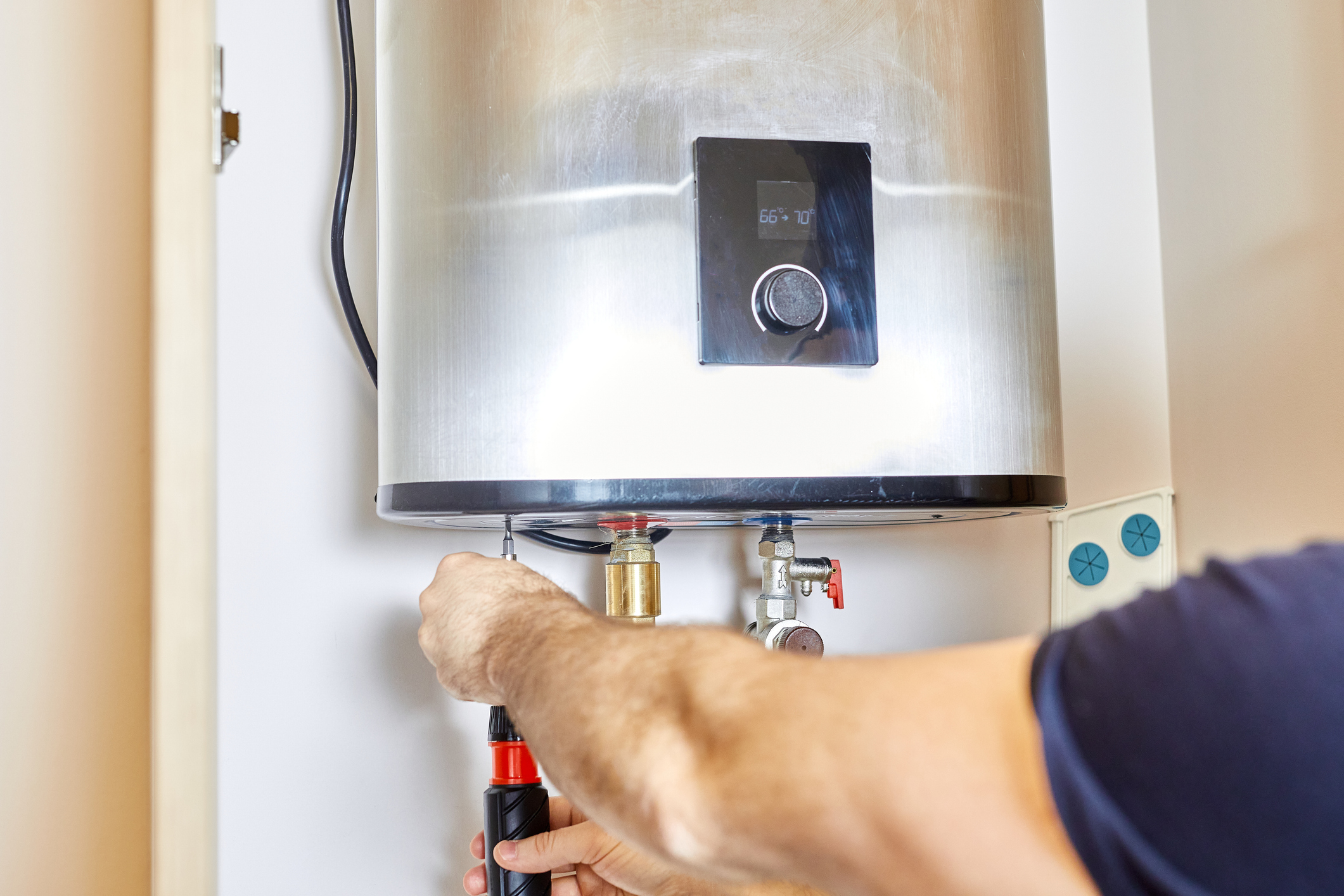
Certain items need to be replaced every 10 to 12 years to prevent danger. Fire extinguishers lose their pressure over time, while smoke detectors become clogged with particles and lose efficacy. Water heaters also need annual flushing and inspection to avoid carbon monoxide leaks.

Toothbrushes and liquid makeup should be thrown away after three months, because they accumulate harmful bacteria. Powder–based makeup and perfume (which loses its scent) can be used for about 2 years.

The pillows, shoes, and mattresses we rely on for comfort can cause back, neck, and foot problems after too long. Pillows become flat and lumpy after two years; mattresses get saggy and uneven after seven, while the shock–absorbent soles of running shoes wear down between 300 and 500 miles.

The last items I want to talk about need replacing for efficiency’s sake. After six months, air filters become too clogged with dirt and dust to work resourcefully; computers become mostly obsolete within seven years, and spices lose their flavour after being exposed to the air for a year.